LVCF’s Robyn Weaver Participates in National Facilitation Intensive
In Robyn Weaver’s work at the Lehigh Valley Community Foundation, bringing people into the same room is only the beginning.
As Program Officer for Capacity Building, Robyn’s role is rooted in convening with purpose: creating conditions where nonprofit and community leaders can learn from one another, build trust, and move toward shared understanding. She is a connector, a bridge builder, and, in many ways, a designer of the kind of space where honest conversation can happen.
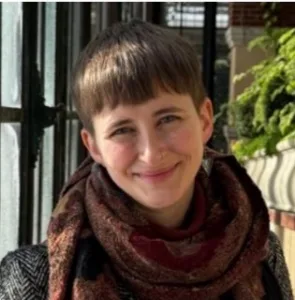
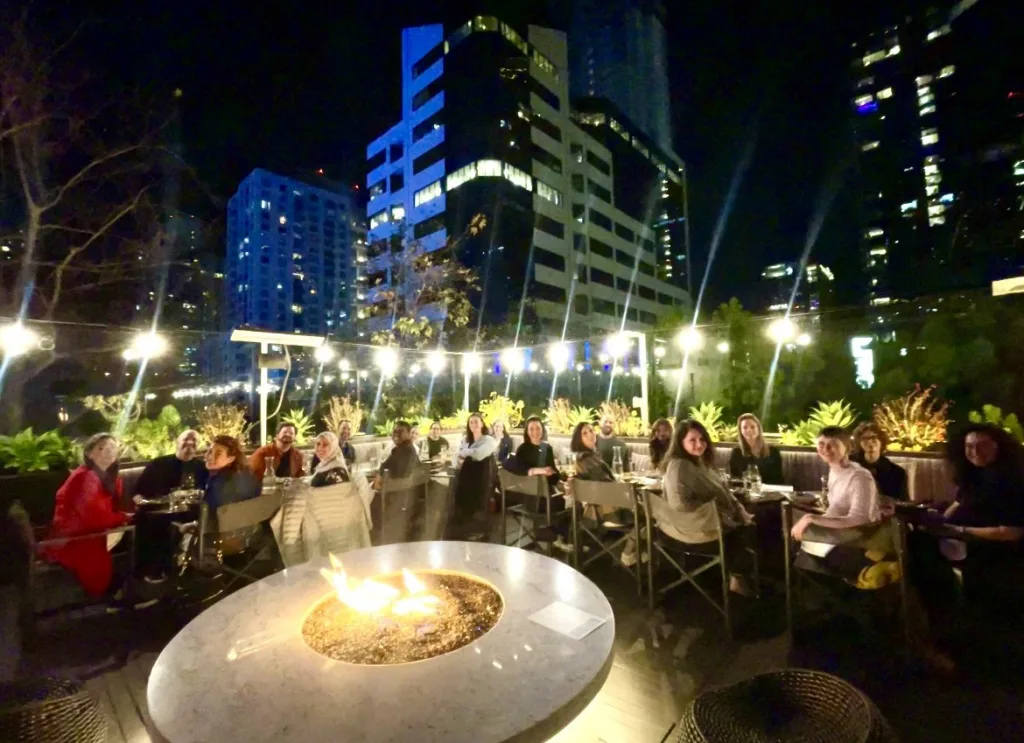
This year, that work took Robyn to San Diego, California, where she participated in the Council on Foundations’ Communicating Across Divides: A Facilitation Intensive, a highly competitive national program offered by Resetting the Table through the Council on Foundations. The intensive brought together a small cohort of philanthropic leaders from across the country for two days of immersive learning and practice followed by remote learning focused on one of the most urgent questions facing communities today: How do we stay in conversation when the issues are difficult, the stakes feel high, and people do not agree?
Robyn’s selection for the national cohort is a notable recognition of both her leadership and the Lehigh Valley Community Foundation’s commitment to strengthening the civic and nonprofit infrastructure of the region. At a time when many communities are navigating conflict, distrust, and deepening divides, the ability to convene people across differences is no longer a soft skill. It is essential community work.
The Resetting the Table Approach
The facilitation intensive was led by Resetting the Table, an organization known for its work supporting constructive communication across political, social, religious, and cultural divides. Rather than treating disagreement as something to avoid, Resetting the Table’s approach gives facilitators tools to help people address differences directly while remaining open, grounded, and connected to one another.
That approach resonated with Robyn’s work in the Lehigh Valley. The Community Foundation often occupies a unique civic position: close enough to understand local needs, broad enough to see patterns across organizations and communities, and trusted enough to bring people together around issues that do not have simple solutions. In that context, facilitation is not just about managing a meeting. It is about creating a container strong enough to hold complexity.
During the intensive, participants practiced facilitation skills designed to support collaborative conversation across divides. They explored how to foster connection among participants, pursue depth rather than surface-level exchange, make space for self-expression, clarify misunderstandings, sustain focus, and help people remain centered even during difficult conversations.
Staying Open in Difficult Conversations
The work asks a great deal of the facilitator. It requires attention not only to what is being said, but also to what is happening beneath the surface: where people are becoming reactive, where they are withdrawing, where an assumption may be hardening into a barrier, or where a moment of honesty might open the door to greater understanding.
Resetting the Table describes its work as a response to the tendencies that often make conflict destructive: self-absorption, rigidity, and reactivity. In their place, the organization trains facilitators to support more productive forms of conversation and exploration. The goal is not to erase disagreement or rush people toward consensus. It is to help participants express what matters to them, address differences with clarity, and sustain enough receptivity to remain in relationship with one another.
For community foundations, that kind of capacity matters. Across the country, philanthropic institutions are increasingly being called upon to serve as conveners, not only funders. They are asked to gather nonprofit partners, donors, civic leaders, residents, and institutions around issues that are urgent and often emotionally charged: housing, education, health, belonging, economic mobility, racial equity, and community trust. The quality of those conversations can shape the quality of the solutions that follow.
Bringing the Learning Back Home
Robyn’s participation in the intensive reflects the Lehigh Valley Community Foundation’s understanding that strong communities are built through more than resources alone. They are built through relationships, shared learning, and the patient work of making room for different perspectives. By investing in Robyn’s continued development, the Foundation is also investing in the region’s capacity to work through hard questions with greater care and courage.
In addition to participating in the cohort, Robyn completed Resetting the Table’s Train the Trainer program for its Speaking Across Conflict workshop. That added component deepens the significance of the experience. It means Robyn is not only bringing back concepts from a national learning opportunity; she is building the capacity to carry elements of that work into future conversations, trainings, and convenings.
That distinction is important. In many professional development experiences, the benefit remains primarily with the participant. Here, the learning has the potential to ripple outward. The tools Robyn practiced in San Diego can inform how the Foundation designs gatherings, supports nonprofit leaders, and creates spaces where people can speak honestly while staying connected to a larger shared purpose.
A National Cohort, Shared Questions
The intensive also connected Robyn with peers from foundations across the country who are asking similar questions in their own communities. How do we create the conditions for people to listen more fully? How do we help communities move beyond performance and defensiveness into deeper conversation? How do we support leaders as they navigate disagreement without losing sight of common work?
Those questions are not abstract. They show up in board rooms, community meetings, grantmaking conversations, strategic planning sessions, and neighborhood gatherings. They show up whenever people with different roles, experiences, histories, and hopes are asked to imagine a future together.
The Discipline of Better Conversations
At its core, Robyn’s participation in Communicating Across Divides is a story about the discipline of convening. It is about the belief that better conversations do not happen by accident. They require practice, structure, humility, and skilled facilitation. They require someone who can hold the room, listen for what is not yet being said, and help people remain open long enough for something more constructive to emerge.
For the Lehigh Valley Community Foundation, Robyn’s selection for this national cohort is both a recognition and an investment. It recognizes her leadership as a thoughtful practitioner in the field of capacity building. It also strengthens the Foundation’s ability to serve as a trusted civic partner in a region where collaboration, connection, and honest dialogue are central to lasting community impact.
There were no event photos to capture the work as it happened in San Diego. But in some ways, the most important evidence will not be found in a group picture. It will be seen in the rooms Robyn helps shape from here: rooms where people feel invited to speak with clarity, listen with care, and stay engaged even when the conversation is hard.
That is the promise of this work. Not that divides disappear, but that communities become better equipped to face them together.
-end-